
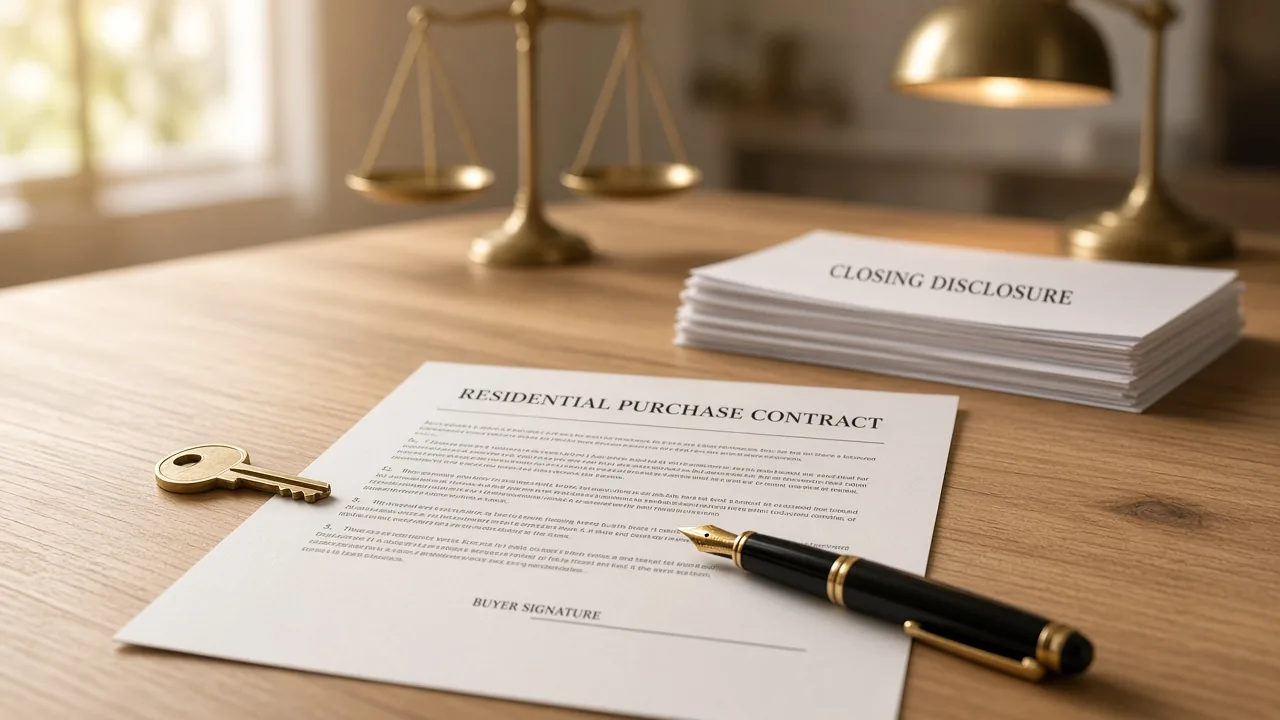
In Texas, a real estate attorney is not required to buy or sell a home. Texas is a title-company state: a licensed title company handles the closing end to end, so the mortgage lenders and the standard contracts are written to close without a lawyer in the room. That is the short answer, and it surprises a lot of people who move here from states where an attorney must sit at every table. The fuller answer is that most routine Katy and Houston closings never involve an attorney, but a handful of specific situations genuinely call for one. Here is who does what in a Texas closing and how to know which side of that line your deal is on.
Texas is a title-company closing state
Real estate closing rules vary by state. Some states, including most of the states along the East Coast, require a licensed attorney to prepare the documents and sit at the closing. Texas does not. Instead, the title company is the backbone of the transaction, and in most resale purchases the title company you and the seller pick is also the closing agent.
In a typical Katy or Houston closing, the title company:
- holds the earnest money in escrow;
- runs the title search and issues the title commitment and title insurance policies;
- prepares the deed and the settlement documents on the state-approved TREC forms;
- coordinates the signing and funding, then records the deed with the county; and
- makes sure every lien and payoff is handled so you receive marketable, insurable title.
An attorney is not needed to do any of that. Nobody is being shortchanged: the title company's closing officer is professionally trained for this work, and the title insurance the company issues is what backs the search and protects your ownership, as we cover in the detail on who pays for title insurance in Texas.
What the standard Texas contract says about attorneys
The workhorse form for Texas resales is the TREC One to Four Family Residential Contract, the state-promulgated contract that real estate agents are required to use. That contract is built for a title-company closing and contains no requirement for an attorney.
But it does carry a standing note near the signature block: consult an attorney before signing. That advice exists for a real reason. By law, real estate license holders in Texas are not allowed to give legal advice or interpret contract language for you. That line in the contract is the state gently reminding you that the agent is your guide through the process, but not your lawyer, and that you always have the option to have a lawyer review the paperwork on your behalf.
Is there an attorney-approval contingency in Texas?
Some homebuyers moving from other states expect a standard attorney-approval clause: a window after the contract is signed during which the buyer's attorney must review and approve it, with the ability to walk away if they do not. That is a common feature of deals in attorney-closing states.
The standard TREC resale contract has no such clause, and TREC does not publish an official attorney-approval addendum. If a buyer wants a legal-review window, it has to be added as a custom provision, usually written in by an attorney through the contract's Special Provisions paragraph. A real estate agent cannot draft that legal language for you, which is another reason a buyer who wants that protection should talk to a lawyer. For everyone else, the process onboard your deal is simpler: your protections in the first week are the option period and a good buyer's agent, not an attorney review clause.
When you really should consider hiring an attorney
None of this means lawyers have no place in a Texas home deal. They absolutely do, in specific situations where the standard contract cannot cover you. Consider a real estate attorney when:
- The transaction is anything but the standard resale. A heavily customized contract, seller financing, a land or lot purchase, a lease-to-own arrangement, or a commercial deal all fall outside the one-size-fits-all TREC forms.
- Title comes back complicated. If the title search turns up an old lien, an unresolved judgment, an easement or boundary dispute, or an inheritance issue, a lawyer can advise on whether and how the problem can be cleared before closing.
- New construction. Builder contracts are not the TREC resale form. They are drafted by the builder's attorneys and heavily favor the builder, and they are a common place buyers pay for an attorney to review before signing.
- Your personal life makes the title messy. Buying or selling during a divorce, through a trust or estate, or in a way that mixes family, business, or ownership structures is a legal question as much as a real estate one.
- Something is in dispute. If the negotiated terms are being contested after the contract is signed, or if a party wants to terminate or enforce a deal, that is squarely in attorney territory.
In those cases an attorney earns their fee, and we would be the first to point you to one. Real estate agents handle the market and the process; a lawyer handles the law. Knowing which of the two your specific deal needs is exactly the kind of straightforward honesty Carol brings to every transaction.
What an attorney actually costs, in general
Because attorneys bill by the hour and because fees vary widely by firm and by how complicated your review is, this article will not quote you a number, and you should not trust one from the internet either. What is safe to say is that for a routine resale, the cost of legal review is usually more than a title-company-only closing, which is exactly why most routine Katy and Houston deals skip it without any risk. In the complex situations above, the peace of mind and the risk management are typically worth the check. If you ever want a realistic sense of when an attorney makes sense for your deal, ask us directly and we will talk it through honestly instead of trying to sell you something.
Where the actual rules come from
The shape of a Texas closing is set by state law and by the forms the Texas Real Estate Commission (TREC) requires real estate license holders to use. The advise-to-consult-an-attorney note and the absence of an attorney-approval clause are built into the official TREC One to Four Family Residential Contract, and title company practice is governed by the Texas Department of Insurance. Those are the sources to check when you want to confirm who does what in your own transaction. And because every deal is different, nothing here is legal advice; if you are in one of the situations above, a qualified Texas real estate attorney is the right person to ask.
Want a straight answer about your Texas closing?
The best way to know whether your deal needs a lawyer is to have a broker walk you through the closing that actually awaits you. If you are buying or selling in Katy or Greater Houston, call Carol at (832) 212-2772 or send a note through the contact page. She will explain who handles each step of your closing, when legal review is worth it, and how to get from signed offer to keys on the timeline buyers and sellers in this market actually run. No pressure, no jargon, and no guesswork.